Waking up in the middle of the night is completely normal. Almost everyone surfaces briefly between sleep cycles - most people just roll over and never remember it. The problem isn't the waking. It's what happens next: you check the time, the screen lights up, and a two-minute wake-up becomes a lost hour.
This guide walks through what to do the moment you wake, why your phone is working against you, and a simple wind-down you can lean on when sleep won't come back on its own.
First, don't check the time
The instinct is to glance at the clock. Resist it. Knowing it's "3:47 and I have to be up at 7" triggers a little spike of stress and mental math - exactly the kind of alert thinking that pushes sleep further away. Clock-watching also tends to become compulsive: you check, you calculate, you worry, you check again.
If you use your phone as an alarm, this is doubly true, because reaching for the time means reaching for the single most stimulating object in the room.
Keep it dark and stay horizontal (for now)
Light is the master switch for your body clock. Bright light - especially the blue-white glow of a screen - tells your brain it's morning and suppresses the melatonin that's trying to pull you back under. Keep the room as dark as you can. Don't turn on the overhead light. Don't open your phone.
Give yourself a few minutes lying still with your eyes closed. Slow your breathing. A lot of the time, if you simply don't do anything stimulating, you'll drift off before you realize it.
Try a slow breathing pattern
If your mind is racing, give it one boring job. A slow, extended exhale nudges your nervous system out of "alert" mode. A simple version:
- Breathe in gently through your nose for a count of four.
- Let it out slowly through your mouth for a count of six or eight.
- Repeat, keeping the out-breath longer than the in-breath.
The counting also crowds out the anxious loop of thoughts - the "am I going to be exhausted tomorrow?" spiral that keeps so many people awake. You're not trying to force sleep. You're just making the conditions right and getting out of your own way.
The 20-minute rule. If you've been lying awake for what feels like 20 minutes or more and you're getting frustrated, don't keep fighting it in bed. Get up, keep the lights low, and do something quiet and un-stimulating - read a few pages of a physical book, sit somewhere calm - until you feel sleepy again. This stops your brain from learning to associate your bed with lying awake.
Why reaching for your phone backfires
Here's the trap. You wake, you feel restless, and your phone is right there promising a quick distraction until you're sleepy. But a phone is engineered to do the opposite of what you need:
- It's bright. The screen light suppresses melatonin and signals "wake up."
- It's endless. Feeds, videos, and news are designed with no natural stopping point, so "just checking" becomes 45 minutes.
- It's activating. A stressful email, an argument in the comments, or one genuinely interesting video spikes your alertness right when you're trying to power down.
The result is the classic 3am scroll: you reach for the phone to help you sleep, and it does exactly the opposite. If this is a nightly pattern for you, the most reliable fix isn't more willpower at 3am - it's making the phone unavailable before you're awake enough to negotiate with yourself.
How Malko helps you get back to sleep
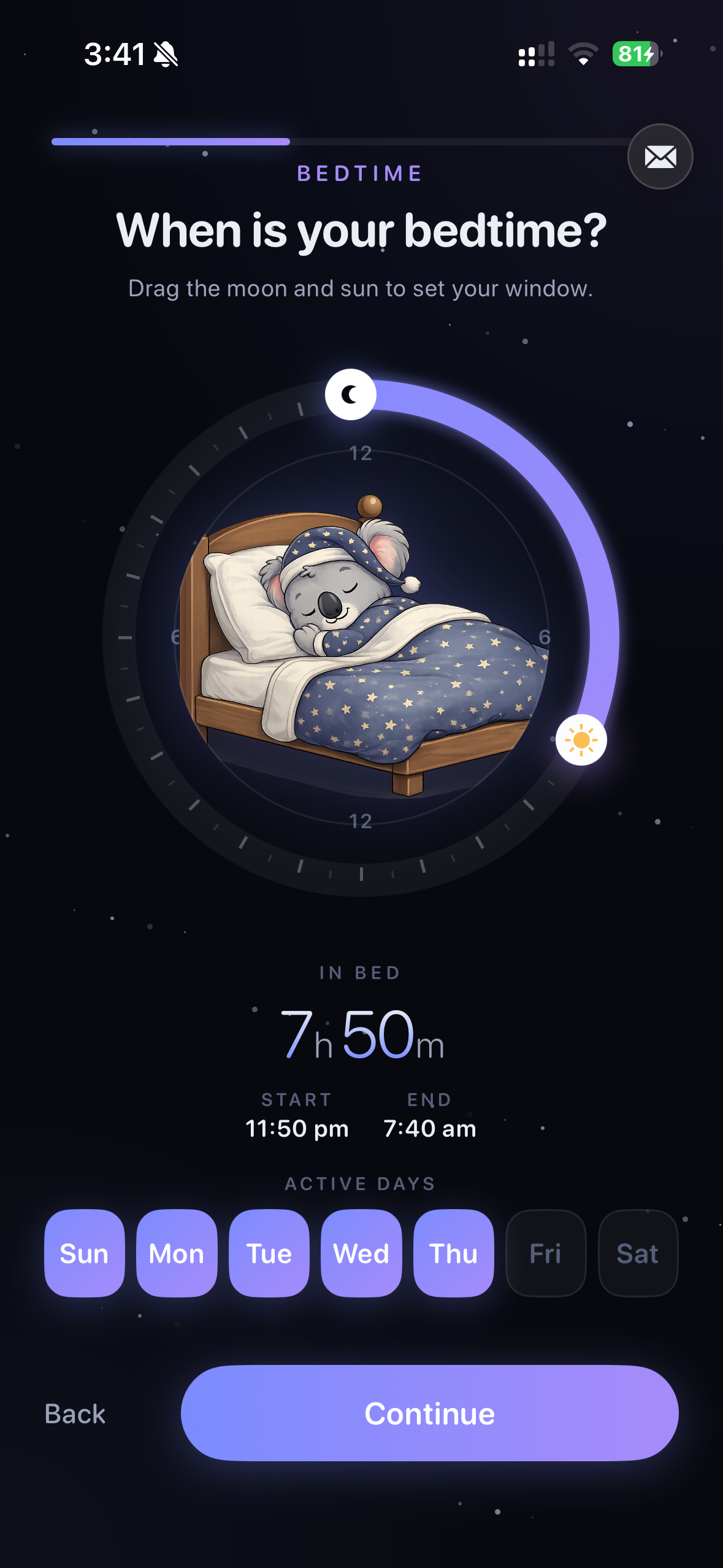
Malko is a bedtime app blocker built for exactly this moment. You set your sleep window once, and every night Malko quietly locks the apps that keep you up - social, video, news, games. So when you wake at 3am and reach for your phone out of habit, the feed simply isn't there.
Instead of the scroll, Malko offers a timed wind-down - a few minutes of guided breathing, a short meditation, or a calming read - designed to lower your alertness rather than raise it. Most people drift off before the timer ends. And because Malko uses signals like light and movement to tell whether you're genuinely up or just scrolling horizontally, it stays out of your way when you actually need your phone and holds the line when you don't. It all runs on-device through Apple Screen Time, so nothing about your night ever leaves your phone.
Get Malko free on the App StoreBuild a night that wakes you up less
Getting back to sleep faster is easier when you wake less often and less intensely. A few habits that help over time:
- Keep the phone out of arm's reach. If it's across the room, the 3am reach takes effort - and that pause is often enough to fall back asleep instead.
- Protect your wind-down. A screen-heavy hour before bed makes lighter, more fragmented sleep more likely. Trade some of it for something calmer.
- Keep a consistent sleep window. Going to bed and waking around the same times steadies your body clock, so night wakings get shorter.
- Watch caffeine and alcohol. Both fragment sleep in the second half of the night, which is exactly when 3am wake-ups happen.
None of this requires heroic willpower. It requires setting things up once so the easy choice is also the sleep-friendly one. For the phone specifically, that's the whole idea behind breaking the nighttime phone habit.
Frequently asked questions
Why can't I fall back asleep after waking up at 3am?
Waking briefly in the night is normal. What keeps you awake is usually what happens next - checking the time, turning on a bright screen, or scrolling. Light and mental stimulation raise alertness and delay the return to sleep. Staying dark, calm, and un-stimulated is what lets your body drift back off.
Should I get out of bed if I can't fall back asleep?
If you're still awake after about 20 minutes and getting frustrated, yes. Get up, keep the lights low, and do something quiet like reading a physical book until you feel sleepy again. This keeps your brain from associating bed with lying awake.
Why does checking my phone make it harder to sleep?
A phone delivers bright light and a stream of engaging content designed to hold your attention. Both wake the brain up. Even a quick check can pull you into 30–60 minutes of scrolling, turning a two-minute wake-up into a lost hour.
Learn more: how to stop doomscrolling at nightHow can an app help me fall back asleep?
Malko blocks distracting apps during your sleep window, so when you reach for your phone at night it offers a timed wind-down - breathing, meditation, or a calming read - instead of the feed. That removes the temptation to scroll and gives you something that actively helps you drift off.
Learn more: how to block apps at bedtime on iPhone
Wake up rested, not wrecked.
Malko blocks the apps that keep you up and guides you back to sleep - gently, every single night.
Download on the App Store